Finding a chef knife tailored for left-handed use can improve comfort, control, and precision in the kitchen. This guide highlights top left-handed chef knives and related blades designed to perform well for left-handed cooks. Each pick features ergonomic design, durable materials, and reliable edge retention to handle vegetables, meat, seafood, and more.
| Product | Brand | Key Benefit |
|---|---|---|
| Lefty’s Left Handed Chef Knife | Lefty’s The Left Hand Store | Ergonomic, left-hand sharpened blade, versatile general purpose |
| Mercer Culinary Asian Collection Left Handed Yanagi Sashimi Knife | Mercer Culinary | High-carbon German steel, precise single-edge |
| WILDMOK Left Handed Nakiri Knife | WILDMOK | Traditional Japanese vegetable knife, single-bevel for lefties |
| Lefty’s Left Handed Paring Knife | Lefty’s The Left Hand Store | Compact general purpose paring with left-handed design |
| Lefty’s Left Handed Knives Set of 4 | Lefty’s The Left Hand Store | Four essential knives with left-handed ergonomics |
Introduction: A left-handed chef knife can transform how you slice, dice, and julienne. This article reviews five highly relevant options, including dedicated left-handed chef blades, a sashimi knife, a nakiri, a paring knife, and a complete set. Each option emphasizes left-hand blade orientation, sturdy construction, and comfortable handles to support efficient, precise cutting in American kitchens.
Lefty’s Left Handed Chef Knife

The Lefty’s Left Handed Chef Knife is designed specifically for left-handed use with a blade sharpened on the correct side when gripped in the left hand. Its stainless steel alloy promises durability and corrosion resistance, supporting tasks from vegetable chopping to meat and general kitchen prep. The wooden-effect plastic handle provides a comfortable, soft grip in the left hand, reducing fatigue during long prep sessions. With an 8-inch blade on a 12 1/2-inch overall knife, this model aims to balance reach and maneuverability for broader kitchen tasks.
Mercer Culinary Asian Collection Left Handed Yanagi Sashimi Knife
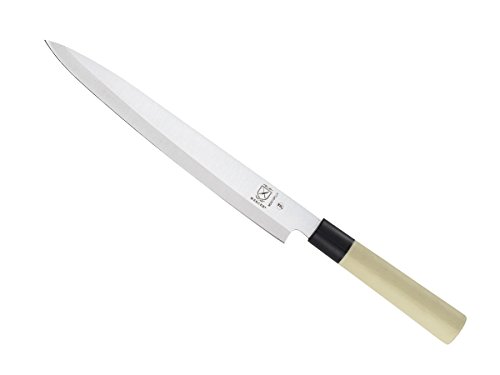
Mercer Culinary’s left-handed yanagi sashimi knife features high-carbon German steel, delivering a single-edge blade with a fine finish. The ergonomic handle is designed for comfort and grip, even when hands are wet. This knife excels in precise slicing of large fish portions, such as salmon or halibut, making it a strong choice for seafood-focused kitchens or sashimi preparation. While optimized for sashimi, the blade also handles broader slicing tasks with accuracy and minimal drag.
WILDMOK Left Handed Nakiri Knife

The 7-inch Nakiri is a traditional Japanese vegetable knife designed for left-handed users with a single bevel. Made from premium German stainless steel, the blade undergoes ice tempering and vacuum heat treatment to reach a hardness near 56-58 on the Rockwell scale. The left-hand single-edge bevel provides clean, precise vegetable cuts with minimal tearing, ideal for fans of even, restaurant-style prep. Its ergonomic handle matches the blade’s precision-focused performance to support steady, controlled cuts.
Lefty’s Left Handed Paring Knife

The Lefty’s Left Handed Paring Knife mirrors the brand’s approach to left-hand ergonomics with a small, precise blade ideal for garlic, trimming, and intricate vegetable work. Its stainless steel alloy promises durability and reliable edge retention, while the left-handed design keeps blade alignment optimized for minorities of kitchen tasks. The 3 1/2-inch blade length makes it a nimble tool for delicate work that requires high control and accuracy in tight spaces.
Lefty’s Left Handed Knives Set of 4

This four-piece set covers essential kitchen tasks with left-handed ergonomics: a 7 1/2-inch paring knife, an 8 1/2-inch steak knife, a 12 1/2-inch chef knife, and a 12 1/2-inch bread knife. The collection emphasizes durable stainless steel, rugged handles, and water- and dishwasher-safe blades, ensuring consistent performance in varied cooking scenarios. The left-handed alignment makes each knife comfortable to use in sequence, reducing fatigue during multi-item prep days and ensuring each blade is properly oriented for left-handed users.
Buying Guide: Left-Handed Knife Considerations
- Blade orientation: Look for knives marketed as left-handed or with a left-handed edge orientation. Some blades are reversible, but true left-handed knives provide the blade bevel on the opposite side for the user’s dominant hand.
- Edge style and bevel: Japanese knives often have single-bevel edges, which can be advantageous for precise cuts in the left hand. Western-style blades are typically double-beveled, which may affect performance for left-handed users.
- Grip and handle ergonomics: An ergonomic handle that fits comfortably in the left hand reduces fatigue and increases control. Consider plastic wood-effect handles for a tactile grip or textured composite options for slip resistance.
- Material and hardness: Stainless steel blades offer corrosion resistance and lower maintenance, while high-carbon steels provide sharper edges and easier resharpening. Hardness in the 56-58 Rockwell range is common for professional-grade blades.
- Weight and balance: A well-balanced knife helps reduce wrist strain during long prep sessions. The weight distribution should feel natural in the left hand, with a blade length suited to its intended use.
- Purpose and versatility: A chef knife handles general prep, while nakiri and sashimi blades are specialized. A set of four knives can cover bread, paring, chef, and steak needs, all tailored to left-handed use.
- Care and maintenance: Follow manufacturer guidance for washing and sharpening. Some knives are dishwasher safe, but hand washing typically preserves edge life and finish.
Across these options, users can choose based on preferred blade type (chef, nakiri, sashimi), left-handed edge orientation, and overall kit needs. For seafood-focused cooking, the sashimi model offers precise slicing; for vegetable-centric prep, the nakiri excels; and for general purpose, a dedicated left-handed chef knife or a full set provides broad utility. Durability, ergonomics, and proper care together determine long-term performance in an American kitchen.