The right tuna fillet knife can make a noticeable difference in yield, texture, and presentation. Below is a curated selection of five high-quality Japanese fillet and boning knives designed for fish, meat, and seafood prep. Each entry highlights blade material, edge geometry, ergonomics, and notable features to help you compare performance and value.
Overview
- Brand varies from HOSHANHO to SANMEIHO, SHAN ZU, RyoriNinja, Sumteene, SYOKAMI, Huusk, and more.
- Blade tech ranges from high-carbon stainless steel to premium powder steel and AUS-8 core constructions.
- Edge angles typically between 9° and 15° per side for razor-like slicing and precise deboning.
- Handle materials include pakkawood, Sapele wood, wenge wood, and octagonal red sandalwood, designed for grip and longevity.
Chosen products emphasize thin blades for minimal waste, flexibility for delicate filleting, and ergonomics for long sessions. This guide helps you assess hardness, corrosion resistance, and balance across five tailored options.
HOSHANHO 7 Inch Fillet Knife

The HOSHANHO 7 Inch Fillet Knife features premium high-carbon steel (10Cr15CoMoV) for durability and sharpness. A hand-polished edge at 15 degrees per side delivers precise cutting across fish, meat, and poultry. The slender 7-inch blade reduces waste while enabling clean deboning and skinning. Ergonomics center on a pakkawood handle that resists corrosion and abrasion, supporting comfort during extended use. This knife aims for professional-grade performance in a home kitchen or commercial setting.
SHAN ZU 7 Inch Fillet Knife
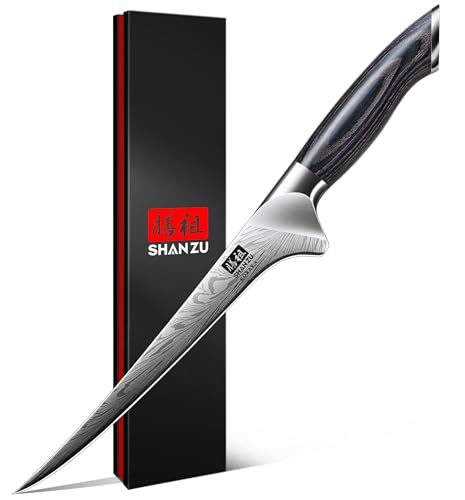
This 7-inch boning knife uses powder steel designed for Japanese knives, delivering hardness and resilience superior to many standard steels. A 2mm-thin blade with a 12° edge angle provides ultra-clean, precise cuts for filleting, trimming, and deboning. Its slightly curved tip enhances separation from bone, and the balanced design with a slanted bolster improves stability and wrist comfort for controlled filleting. A durable pakkawood handle supports long sessions.
RyoriNinja 8.5 Inch Fillet Knife

RyoriNinja’s 8.5-inch fillet knife uses a AUS-8 core with a vacuum heat treatment for balanced hardness and toughness. The sakura wood handle complements a damascus-like aesthetic while delivering a secure, non-slip grip. The blade is honed to 9° on one side, enabling precise, thin slicing for seafood and meat. The design emphasizes control and long-term edge retention, making it suitable for both home cooks and professionals seeking reliable performance.
HOSHANHO 9 Inch Fillet Knife

The 9-inch version of the HOSHANHO fillet knife maintains the same premium 10Cr15CoMoV stainless steel and a 15-degree hand-polished edge. The longer blade is designed for larger fish and meat cuts, offering precise trimming, skinning, and butterfly techniques with reduced effort. Pakkawood handle construction provides corrosion resistance and a comfortable, long-lasting grip for extended tasks in busy kitchens.
Sumteene 9.5 Inch Sashimi Knife
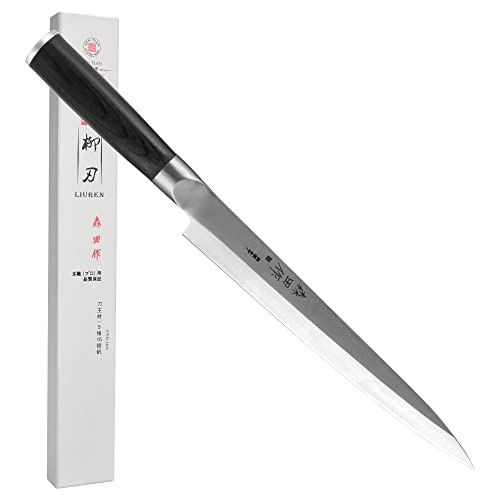
The Sumteene 9.5-inch sashimi knife uses 440A steel with tempering for hardness and longevity. Its single-sided blade is optimized for thin sashimi slices, reducing crushing and tearing. An ergonomic pakkawood handle balances weight for comfortable, precise cuts, while a dampened edge design minimizes sticking and improves slide through fish fillets. This knife is designed for steady, predictable performance in slicing tasks.
Buying decisions for tuna fillet and related knives depend on blade material, edge geometry, and how the knife feels in your hand. The following buying guide outlines key considerations to help you choose the best tool for your kitchen or workspace.
Buying Guide
- : High-carbon stainless steel offers a balance of sharpness and corrosion resistance; powder steel and AUS-8 cores can deliver exceptional edge retention and flexibility. Consider what you’ll fillet most—larger tuna loins or smaller fish—and choose accordingly.
- : Filleting knives often use thin blades with angles between 9° and 15° per side. A thinner blade enhances precision and reduces waste but can require more careful maintenance. A slightly curved tip can assist with separating flesh from bone in tricky cuts.
- : 7–9 inches works well for most tuna and larger fillets; longer blades are beneficial for bigger fish, while shorter blades boost control for delicate work.
- : Ergonomic handles—pakkawood, wood laminates, or full tang constructs—improve grip security and reduce fatigue during long prep sessions. Look for moisture resistance and a non-slip profile.
- : Hand wash and dry promptly to maintain edge life and prevent corrosion. Regular honing helps preserve the edge between sharpenings.
- : Some knives function well as boning, filleting, and skinning tools. If you need a multipurpose option, prioritize flexible blades and comfortable, balanced handles.
- : Premium Japanese blades offer remarkable edge retention and precision but consider your typical workload and storage space. A balanced choice provides durability without unnecessary expense.
In summary, choose a knife with a blade length suited to your typical filleting tasks, a steel type that matches your maintenance routine, and an ergonomic handle that supports steady control. The listed options above provide a spectrum of performance, from compact seven-inch blades to longer nine-inch models, catering to different cooking styles and environments.