For backyard chefs seeking flexible cooking, gas-charcoal-pellet combo grills blend quick gas heat, authentic charcoal flavor, and wood-smoked versatility. This guide highlights top models that integrate gas grilling, charcoal or pellet smoking, and sometimes both, all in one unit. Use the brief product table below to compare core capabilities at a glance, then explore in-depth sections for practical insights and key considerations before you buy.
| Product | Brand | Key Feature | Direct Link |
|---|---|---|---|
| Lifetime Gas Grill And Wood Pellet Smoker Combo | LIFETIME | Fusion Fuel: gas grilling + pellet smoking in one stacked design | Link |
| TYTUS Anaheim 4-Burner | TYTUS | Full outdoor kitchen system with grill, prep cart, smoker, griddle | Link |
| Grills House 2-Burner Gas & Charcoal | Grills House | Dual-fuel with offset smoker and side burner | Link |
| Oklahoma Joe’s Canyon Combo DLX | Oklahoma Joe’s | Charcoal smoker + propane gas grill combo with firebox option | Link |
| Traeger Pro 22 | Traeger | Wood pellet grill & smoker with 6-in-1 versatility | Link |
Lifetime Gas Grill And Wood Pellet Smoker Combo
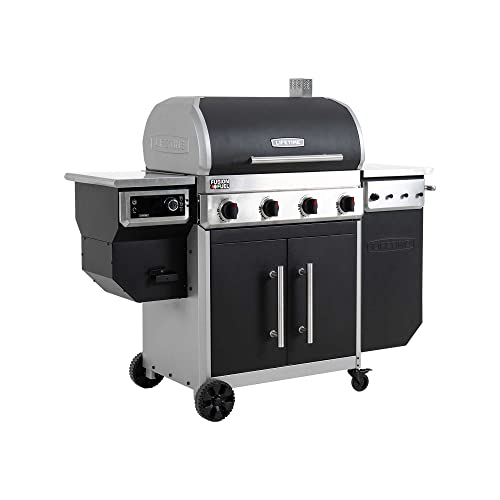
The Fusion Fuel design enables concurrent direct gas grilling and indirect pellet smoking within a stacked layout, delivering versatile cooking without switching devices. This model supports gas-assisted temperature control in cold weather and provides a full grilling surface for both smoking and grilling. Temperature range spans from 180 to 700 degrees Fahrenheit, with a large LCD display for at-a-glance monitoring. The setup aims to simplify outdoor cooking by combining two popular fuel methods in one footprint.
TYTUS Anaheim 4-Burner Gas Grill Bundle

This modular system is designed to expand into a complete outdoor kitchen. The 4-burner gas grill offers 721 square inches of porcelain-enameled cast iron cooking surface, plus a 12,000 BTU side burner. A 4.7 cubic feet prep cart adds substantial workspace and storage, and patented no-tool assembly speeds setup. The unit is compatible with linking a smoker and griddle, enabling a cohesive island-style cooking station for varied meals and entertaining.
Grills House 2-Burner Gas & Charcoal Combo

This dual-fuel grill combines gas heating with an attached offset smoker and a side burner. The total cooking area reaches 1,020 square inches, split into primary gas and charcoal zones, plus a warming rack and offset smoker. The offset smoker allows for adjustable smoke input and heat flow, while a convenient side door supports ash management and adding charcoal during cooking, offering flexibility for crowd-sized gatherings.
Oklahoma Joe’s Canyon Combo DLX

This dual-fuel setup combines charcoal smoking with a three-burner propane grill. The combo supports low-and-slow smoking in the charcoal chamber and rapid high-heat grilling on the propane side. Primary cooking space reaches 750 square inches, with an additional upper rack and an expansive total capacity of around 1,434 square inches. An integrated fuel gauge helps plan refills and ensure uninterrupted cooking during larger cookouts.
Traeger Pro 22

The Traeger Pro 22 represents a classic wood-pitted approach to pellet grilling. It offers 6-in-1 versatility, allowing grilling, smoking, baking, roasting, braising, and BBQ with authentic wood-fired flavor. A Digital Pro Controller provides precise temperature stability from 180°F to 450°F, and the durable powder-coated steel chassis with porcelain-coated grates ensures long-term durability. Large wheels and a sturdy design make it a portable option within a stationary outdoor cooking setup.
Buying Guide
- Fuel versatility: Assess whether you want true dual-fuel operations (gas plus charcoal or pellets) or a primary fuel with a smoker add-on. Dual-fuel models can simplify meal variety but may require more maintenance.
- Cooking space and layout: Compare primary cooking area, warming racks, and any offset or secondary chambers. For entertaining, total space and heat management across zones are critical.
- Temperature control: Look for adjustable regulators, digital controllers, and smoke profiles. Consistent temps matter for both searing and low-and-slow smoking.
- Ease of assembly and maintenance: No-tool assembly and straightforward cleanup reduce setup friction and ongoing upkeep.
- Durability and materials: Powder-coated steel, porcelain-coated grates, and robust fireboxes contribute to longevity in outdoor conditions.
- Portability vs. permanence: If you move grills seasonally, wheels and handles are valuable; for permanent setups, integrated islands may be preferred.
- Fuel availability and cost: Pellet and charcoal availability, plus gas compatibility, can influence ongoing costs and convenience.
- Safety and ventilation: Ensure proper clearance, reliable ignition systems, and safe smoke management to minimize flare-ups and indoor odors.