Soap making often requires precise temperature control to ensure proper saponification and finish. The right digital thermometer helps you monitor both liquids and surfaces with speed and accuracy, whether you’re melting oils, melting lye solutions, or cooling the final bars. Below is a curated selection of infrared and traditional digital thermometers that suit soap makers in the U.S. market. Each product is evaluated for accuracy, ease of use, and material compatibility to support consistent soap results.
| Product | Brand | Strength For Soap Making | Emissivity / Range Notes |
|---|---|---|---|
| Upgraded Digital Infrared Thermometer Gun | DEASOMIYE | Fast surface temp for oils, molds, and cooling stages | -50°C–600°C (-58°F–1112°F); emissivity 0.1–1.0 |
| Laser Infrared Thermometer Non-Contact | DEASOMIYE | Versatile surface readings across kitchen and workshop | -50°C–600°C (-58°F–1112°F); not for humans |
| Sanliang Infrared Thermometer Laser Temp Gun | SanLiang | Accurate surface temps for ovens, griddles, and ovens | 0.1–1.0 emissivity; 12:1 D/T |
| Yacumama Digital Water Thermometer | Yacumama | Liquid temperatures for melting soaps with water content | -58°F to 572°F; IPX7 waterproof |
| Digital Candy Thermometer (Craft911) | Craft911 | Long probe for deep pots and candy-like stages | IP65 waterproof; 10″ probe |
The following sections highlight five relevant thermometers from the list, focusing on soap making use cases such as melting oils, testing liquid soap bases, and monitoring cooling curves. Each entry includes a practical summary of features tailored for soap craft workflows.
Upgraded Infrared Thermometer For Fast Readings

The DEASOMIYE infrared thermometer provides non-contact surface readings with a broad -58°F to 1112°F (-50°C to 600°C) range. It delivers readings in about 0.5 seconds, which helps soap makers track oil melt temps quickly. Emissivity is adjustable from 0.1 to 1.0, enabling more accurate measurements for various oil blends and wax formulations. A common practice is to set emissivity around 0.95 for many cooking- and wax-based materials used in soap making. The device is intended for surface temperatures, not internal temperatures of objects.
Non-Contact Infrared Thermometer For Diverse Surfaces

This DEASOMIYE model emphasizes a wide application range, useful for both kitchen-friendly and workshop tasks. It reads surface temperatures from -58°F to 1112°F and supports emissivity adjustments to improve measurement accuracy on different oils and waxes used in soap making. While suitable for measuring the surface of pots, molds, and cooling surfaces, it should not be used on human bodies, which aligns with soap production safety considerations.
Sanliang Infrared Thermometer With Emissivity Control

The SanLiang thermometer offers a 12:1 distance-to-spot ratio with an adjustable emissivity range of 0.1–1.0. This is particularly useful for soap making where different oil blends and waxes behave differently under heat. The device measures surface temperatures quickly, providing a reliable means to monitor the melting and cooling phases of soap base formulations and ensure consistent batch quality. It is designed for non-human use and emphasizes broad surface readings across varied materials.
Yacumama Waterproof Digital Water Thermometer
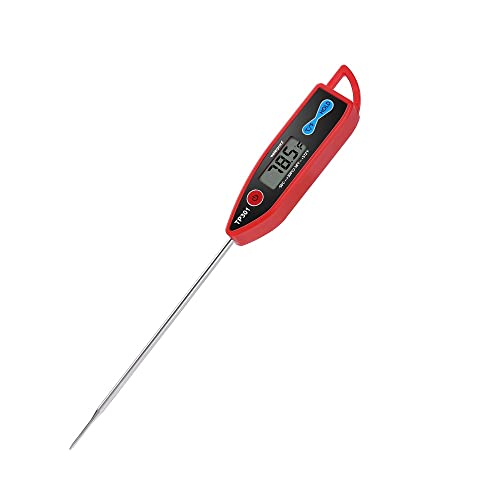
For soap makers who work with water-based bases or need to monitor temperatures in liquid fragrances and oils, the Yacumama thermometer offers IPX7 waterproofing, ensuring easy cleaning after use in wet environments. It provides an instant-read function with accuracy within a narrow margin and supports switching between Celsius and Fahrenheit. The IPX7 rating makes it a practical choice for liquid measurement tasks common in cold-process and melt-and-pour soap workflows.
Craft911 Digital Candy Thermometer With Clip

The Craft911 candy thermometer features a 10-inch stainless steel probe and a pot clip for hands-free operation—a helpful configuration when monitoring hot sugar syrups or other viscous bases used in soap making when experimenting with fragrance embeds or glycerin soaps. The large digital LCD display provides clear readings, and IP65 waterproof design allows for safe washing. The long probe is advantageous when working with tall pots or deep containers.
BOMATA Digital Water Thermometer For Liquids

The BOMATA thermometer is designed for measuring liquids, including water and other cooking liquids, with IPX7 waterproofing and a wide -58°F to 572°F range. It provides fast 2–4 second response and holds readings with a hold function. Its versatility is useful for soap bases that involve water content and brines, allowing accurate liquid temperature checks during formulation and cooling stages. The device also supports Fahrenheit/Celsius switching and automatic shutoff to save energy.
Etekcity Infrared Thermometer Upgrade 774

The Etekcity 774 model is another versatile infrared tool, suited for soap-making tasks such as melting oils, testing molds, and monitoring cooling surfaces. It emphasizes a 12:1 distance-to-spot ratio, enabling safer, distant readings of hot containers. It supports adjustable emissivity and a quick response time, helping to track dynamic heating phases in soap formulations without contact. It is intended for surface measurements on a variety of materials, not body temperature.
Etekcity Infrared Thermometer Upgrade 774

The upgraded Etekcity 774 provides a broad utility set for soap makers seeking a reliable surface thermometer for multiple tasks. Its readings cover a wide temperature range with a similar distance-to-spot ratio and emissivity control, ensuring consistent results across oil melting, fragrance testing, and surface temperatures of molds and cooling racks. Like other infrared models, it measures surface temperatures rather than internal temperatures of materials or bodies.
Buying Guide: Key Purchase Considerations For Soap Making
When choosing a digital thermometer for soap making, consider the following factors to ensure effective results throughout the process from melting to curing:
- Measurement Type: Infrared vs. liquid/food thermometers. Infrared units are great for surface temps (melting oils, molds, cooling surfaces), while probe thermometers excel at liquids and thick bases.
- Temperature Range: Soap making often requires a wide range, including low-temperature melt stages and hotter base temperatures. Look for a range that comfortably covers your typical recipes, such as -50°C to 600°C or -58°F to 1112°F.
- Emissivity Control: Emissivity adjustment (0.1–1.0) improves accuracy across oils, waxes, and fragrances. For many soap bases, an emissivity around 0.95 works well.
- Response Time: Fast readings (0.5–2 seconds) help you monitor rapid changes during oil melting and cooling phases.
- Accuracy And Distance-To-Spot: A higher distance-to-spot ratio (e.g., 12:1) allows safer readings from a distance, which is beneficial when working with hot containers.
- Water And Washability: Waterproof or IP-rated models simplify cleanup after handling sticky bases or water-based fragrances.
- Display And Usability: Large, clear displays support easy reading in busy kitchen or workshop environments. Clip or stand features aid hands-free monitoring.
- Safety And Compliance: For soap making, ensure the thermometer is suitable for non-human use and designed to measure surface temperatures, not internal temperatures of living beings.
Soap makers should test a few materials common to their recipes (oils with different fatty profiles, fragrance oils, liquid bases) to determine which thermometer provides the most consistent readings for their specific formulations. The combination of fast response, adjustable emissivity, and surface accuracy will help optimize melt temperatures, saponification windows, and curing outcomes.